

NATO’s Stress Test Under Trump: Alliance Credibility, Burden-Sharing, and the Fight Over Strategic Territory
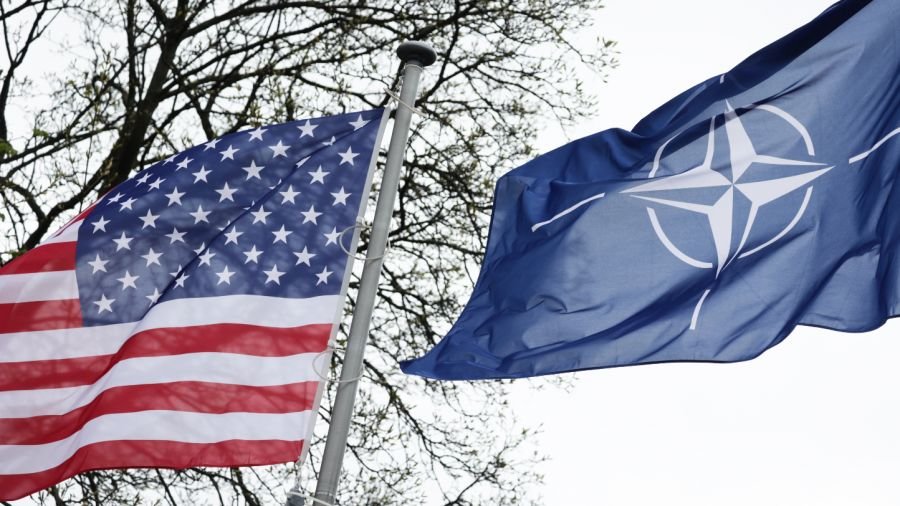
A clash over NATO reciprocity and strategic basing—spilling from Afghanistan grievances into Greenland access talks and the Diego Garcia sovereignty dispute—now threatens to redefine alliance cohesion.
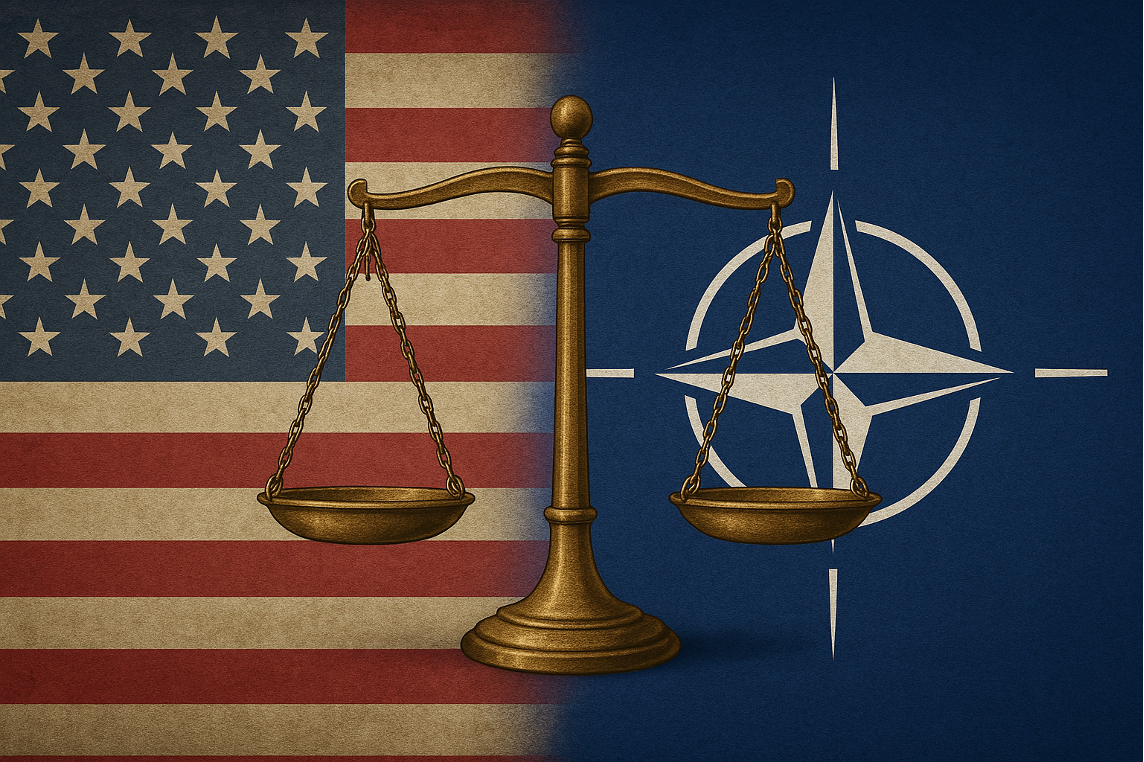
The urgent issue is NATO’s credibility under intensifying U.S. pressure for real reciprocity—money, capability, and strategic access—and the risk that alliance politics fracture just as great-power competition tightens.
President Donald Trump has publicly questioned whether NATO would be there for the United States in a future crisis, while the White House is defending a hard line that America’s contributions dwarf others and that higher allied defense spending is necessary.
The blowback from London, paired with the sudden re-freezing of the Chagos Islands sovereignty transfer that involves the U.S. base on Diego Garcia, shows how fast words about burden-sharing can become decisions that reshape basing, deterrence, and alliance trust.
This is not a debate about whether the United States has legitimate interests.
It does.
The U.S. position being advanced is straightforward: America carries an outsized share of NATO’s defense burden; Europe needs to take larger responsibility for its own security; and U.S. strategic requirements in places like Greenland and Diego Garcia are not optional when rivals pay attention and exploit vacuums.
The controversy is how that message is delivered, and whether political friction inside allied capitals triggers concrete moves that complicate the alliance’s operating model.
The immediate political spark came from Trump’s remarks about NATO allies in Afghanistan, described in Britain as offensive and shocking, with the prime minister invoking the loss of 457 British troops and the sacrifices of the wounded.
The U.S. side did not retract and instead emphasized the scale of U.S. contributions to NATO and Trump’s success in pushing allies toward a five percent defense spending commitment.
This is now colliding with a separate but connected sovereignty and basing dilemma: Britain was preparing to discuss a deal to transfer sovereignty over the Chagos Islands to Mauritius, which includes Diego Garcia—an air base that recently hosted a substantial portion of America’s B-2 bomber fleet during tensions with Iran.
After U.S. criticism and domestic warnings in Britain about a 60-year U.S.-UK arrangement, the planned parliamentary discussion was delayed.
Confirmed vs unclear: What we can confirm is that Trump questioned NATO reliability for the United States, criticized allied performance in Afghanistan, and publicly attacked Britain’s plan to hand over Diego Garcia as a sign of weakness that rivals would notice.
We can confirm British leaders rejected the Afghanistan characterization, citing 457 dead and the unique fact that NATO’s collective-defense clause has been invoked only once, after which Britain and others responded to America’s call.
We can confirm the White House defended Trump’s burden-sharing push and tied U.S. capabilities to Greenland’s defense.
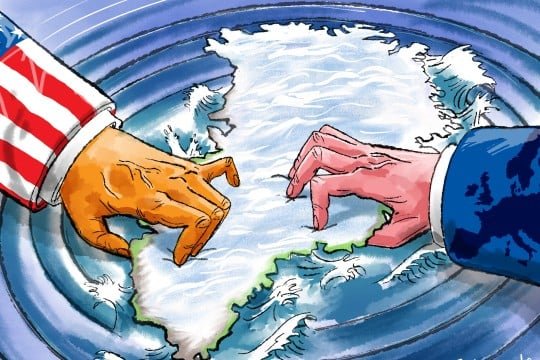
What’s still unclear is the real decision path behind Britain’s Chagos delay—how much was driven by American reaction versus domestic politics—and what “full and permanent access” to Greenland would mean in practice given that NATO’s secretary-general is described as not offering any compromise on Danish sovereignty.
Mechanism: Alliances run on credibility, not paperwork.
Credibility is built when partners believe commitments will hold under stress, that costs will be shared in a tolerable way, and that operational needs—bases, overflight rights, logistics—will be available without last-minute political vetoes.
When a leading ally signals doubt about reciprocity, it raises the price of political consent in other capitals.
Leaders then harden their posture to avoid looking weak at home, even if they still want the alliance to function.
The result is a feedback loop: sharper U.S. pressure produces sharper allied defensiveness, and that defensiveness can translate into slower approvals, delayed agreements, and public moral accounting over past sacrifices.
Stakeholder leverage: The United States holds leverage because it provides irreplaceable high-end capabilities inside NATO and is central to strategic defense in the North Atlantic and Arctic.
Britain holds leverage because Diego Garcia’s political status and Britain’s sovereignty choices affect U.S. basing continuity, and because the U.S.-UK relationship is a core alliance pillar.
Denmark and Greenland matter because sovereignty and access sit at the junction of NATO solidarity and Arctic security, where U.S. capabilities are portrayed as uniquely relevant.
Domestic actors inside Britain—such as the opposition warnings referenced around the House of Lords debate—hold leverage by raising the political cost of any deal that could be framed as weakening U.S.-UK defense arrangements.
Competitive dynamics: Rivals do not need to defeat NATO militarily to benefit; they need to widen the gap between alliance promises and alliance politics.
If allies start treating U.S. access demands as coercion, they may seek to hedge, slow-roll cooperation, or prioritize domestic symbolism over strategic efficiency.
If the United States concludes allies will not reliably match commitments with capabilities, Washington will demand more explicit quid pro quos and higher spending targets.
This competitive squeeze forces trade-offs: alliance unity versus alliance discipline, diplomatic tone versus deterrence signaling, and sovereignty sensitivities versus the operational reality of bases and access.
Scenarios: Base case: the dispute cools without a public apology, Britain keeps the Chagos transfer on ice while consultations continue, and NATO’s spending push becomes the central bargaining arena; early indicators include repeated references to five percent spending and careful language about Greenland “access” without altering sovereignty.
Bull case: allies translate the spending push into rapid commitments, the Greenland access talks settle into a durable arrangement consistent with Danish sovereignty, and Diego Garcia’s status is stabilized with minimal political drama; early indicators include allied leaders publicly aligning on capability goals and smoother legislative handling of basing-related agreements.
Bear case: the rhetoric hardens into a trust rupture, Britain’s domestic politics lock in a resentful posture, and Greenland access becomes a loyalty test that splinters NATO messaging; early indicators include escalating public statements about alliance obligations, renewed threats of economic penalties tied to strategic disputes, and repeated parliamentary delays or conditions attached to basing and sovereignty arrangements.
What to watch:
- Any official clarification that narrows or sharpens Trump’s claim about allied performance in Afghanistan.
- Whether Britain resumes parliamentary discussion of the Chagos transfer or keeps delaying it.
- Any explicit statement that the Diego Garcia base rights are insulated from sovereignty negotiations.
- Concrete movement toward the five percent allied defense spending commitment, beyond rhetoric.
- Public language shifts by British leaders on whether an apology is needed or strategically unhelpful.
- Specifics, if any, on what “full and permanent access” to Greenland means operationally.
- Any reaffirmation or reframing of NATO collective-defense expectations in U.S. or allied statements.
- Signs that Denmark or Greenland harden sovereignty language in response to access demands.
- References to China or Russia exploiting “weakness” tied to Diego Garcia or Arctic access.
- Any renewed discussion of tariffs as leverage linked to strategic disputes with European states.
The deeper strategic reality is that the United States is pressing for an alliance model that looks less like an insurance policy paid mostly by Washington and more like a consortium where members purchase credible defense through real spending and shared risk.
That approach can strengthen deterrence if it produces capabilities and predictability.
It can also degrade alliance cohesion if allies experience the pressure as humiliation rather than a negotiation over shared security.
The outcome will hinge less on past grievances and more on whether Washington and key allies can convert blunt messages into operational agreements: higher spending that produces deployable power, and strategic access that respects sovereignty while meeting deterrence needs.
President Donald Trump has publicly questioned whether NATO would be there for the United States in a future crisis, while the White House is defending a hard line that America’s contributions dwarf others and that higher allied defense spending is necessary.
The blowback from London, paired with the sudden re-freezing of the Chagos Islands sovereignty transfer that involves the U.S. base on Diego Garcia, shows how fast words about burden-sharing can become decisions that reshape basing, deterrence, and alliance trust.
This is not a debate about whether the United States has legitimate interests.
It does.
The U.S. position being advanced is straightforward: America carries an outsized share of NATO’s defense burden; Europe needs to take larger responsibility for its own security; and U.S. strategic requirements in places like Greenland and Diego Garcia are not optional when rivals pay attention and exploit vacuums.
The controversy is how that message is delivered, and whether political friction inside allied capitals triggers concrete moves that complicate the alliance’s operating model.
The immediate political spark came from Trump’s remarks about NATO allies in Afghanistan, described in Britain as offensive and shocking, with the prime minister invoking the loss of 457 British troops and the sacrifices of the wounded.
The U.S. side did not retract and instead emphasized the scale of U.S. contributions to NATO and Trump’s success in pushing allies toward a five percent defense spending commitment.
This is now colliding with a separate but connected sovereignty and basing dilemma: Britain was preparing to discuss a deal to transfer sovereignty over the Chagos Islands to Mauritius, which includes Diego Garcia—an air base that recently hosted a substantial portion of America’s B-2 bomber fleet during tensions with Iran.
After U.S. criticism and domestic warnings in Britain about a 60-year U.S.-UK arrangement, the planned parliamentary discussion was delayed.
Confirmed vs unclear: What we can confirm is that Trump questioned NATO reliability for the United States, criticized allied performance in Afghanistan, and publicly attacked Britain’s plan to hand over Diego Garcia as a sign of weakness that rivals would notice.
We can confirm British leaders rejected the Afghanistan characterization, citing 457 dead and the unique fact that NATO’s collective-defense clause has been invoked only once, after which Britain and others responded to America’s call.
We can confirm the White House defended Trump’s burden-sharing push and tied U.S. capabilities to Greenland’s defense.
What’s still unclear is the real decision path behind Britain’s Chagos delay—how much was driven by American reaction versus domestic politics—and what “full and permanent access” to Greenland would mean in practice given that NATO’s secretary-general is described as not offering any compromise on Danish sovereignty.
Mechanism: Alliances run on credibility, not paperwork.
Credibility is built when partners believe commitments will hold under stress, that costs will be shared in a tolerable way, and that operational needs—bases, overflight rights, logistics—will be available without last-minute political vetoes.
When a leading ally signals doubt about reciprocity, it raises the price of political consent in other capitals.
Leaders then harden their posture to avoid looking weak at home, even if they still want the alliance to function.
The result is a feedback loop: sharper U.S. pressure produces sharper allied defensiveness, and that defensiveness can translate into slower approvals, delayed agreements, and public moral accounting over past sacrifices.
Stakeholder leverage: The United States holds leverage because it provides irreplaceable high-end capabilities inside NATO and is central to strategic defense in the North Atlantic and Arctic.
Britain holds leverage because Diego Garcia’s political status and Britain’s sovereignty choices affect U.S. basing continuity, and because the U.S.-UK relationship is a core alliance pillar.
Denmark and Greenland matter because sovereignty and access sit at the junction of NATO solidarity and Arctic security, where U.S. capabilities are portrayed as uniquely relevant.
Domestic actors inside Britain—such as the opposition warnings referenced around the House of Lords debate—hold leverage by raising the political cost of any deal that could be framed as weakening U.S.-UK defense arrangements.
Competitive dynamics: Rivals do not need to defeat NATO militarily to benefit; they need to widen the gap between alliance promises and alliance politics.
If allies start treating U.S. access demands as coercion, they may seek to hedge, slow-roll cooperation, or prioritize domestic symbolism over strategic efficiency.
If the United States concludes allies will not reliably match commitments with capabilities, Washington will demand more explicit quid pro quos and higher spending targets.
This competitive squeeze forces trade-offs: alliance unity versus alliance discipline, diplomatic tone versus deterrence signaling, and sovereignty sensitivities versus the operational reality of bases and access.
Scenarios: Base case: the dispute cools without a public apology, Britain keeps the Chagos transfer on ice while consultations continue, and NATO’s spending push becomes the central bargaining arena; early indicators include repeated references to five percent spending and careful language about Greenland “access” without altering sovereignty.
Bull case: allies translate the spending push into rapid commitments, the Greenland access talks settle into a durable arrangement consistent with Danish sovereignty, and Diego Garcia’s status is stabilized with minimal political drama; early indicators include allied leaders publicly aligning on capability goals and smoother legislative handling of basing-related agreements.
Bear case: the rhetoric hardens into a trust rupture, Britain’s domestic politics lock in a resentful posture, and Greenland access becomes a loyalty test that splinters NATO messaging; early indicators include escalating public statements about alliance obligations, renewed threats of economic penalties tied to strategic disputes, and repeated parliamentary delays or conditions attached to basing and sovereignty arrangements.
What to watch:
- Any official clarification that narrows or sharpens Trump’s claim about allied performance in Afghanistan.
- Whether Britain resumes parliamentary discussion of the Chagos transfer or keeps delaying it.
- Any explicit statement that the Diego Garcia base rights are insulated from sovereignty negotiations.
- Concrete movement toward the five percent allied defense spending commitment, beyond rhetoric.
- Public language shifts by British leaders on whether an apology is needed or strategically unhelpful.
- Specifics, if any, on what “full and permanent access” to Greenland means operationally.
- Any reaffirmation or reframing of NATO collective-defense expectations in U.S. or allied statements.
- Signs that Denmark or Greenland harden sovereignty language in response to access demands.
- References to China or Russia exploiting “weakness” tied to Diego Garcia or Arctic access.
- Any renewed discussion of tariffs as leverage linked to strategic disputes with European states.
The deeper strategic reality is that the United States is pressing for an alliance model that looks less like an insurance policy paid mostly by Washington and more like a consortium where members purchase credible defense through real spending and shared risk.
That approach can strengthen deterrence if it produces capabilities and predictability.
It can also degrade alliance cohesion if allies experience the pressure as humiliation rather than a negotiation over shared security.
The outcome will hinge less on past grievances and more on whether Washington and key allies can convert blunt messages into operational agreements: higher spending that produces deployable power, and strategic access that respects sovereignty while meeting deterrence needs.
AI Disclaimer: An advanced artificial intelligence (AI) system generated the content of this page on its own. This innovative technology conducts extensive research from a variety of reliable sources, performs rigorous fact-checking and verification, cleans up and balances biased or manipulated content, and presents a minimal factual summary that is just enough yet essential for you to function as an informed and educated citizen. Please keep in mind, however, that this system is an evolving technology, and as a result, the article may contain accidental inaccuracies or errors. We urge you to help us improve our site by reporting any inaccuracies you find using the "Contact Us" link at the bottom of this page. Your helpful feedback helps us improve our system and deliver more precise content. When you find an article of interest here, please look for the full and extensive coverage of this topic in traditional news sources, as they are written by professional journalists that we try to support, not replace. We appreciate your understanding and assistance.