
U.S. Joins Russia in Rejecting UN Resolution Condemning Ukraine Invasion
In a notable diplomatic shift, the U.S. votes alongside Russia against a UN resolution that condemns the invasion of Ukraine, reflecting complex geopolitical dynamics.
In a significant diplomatic move, the United States voted against a United Nations resolution condemning Russia's invasion of Ukraine, aligning itself with Russia during a moment of heightened global scrutiny regarding the conflict.
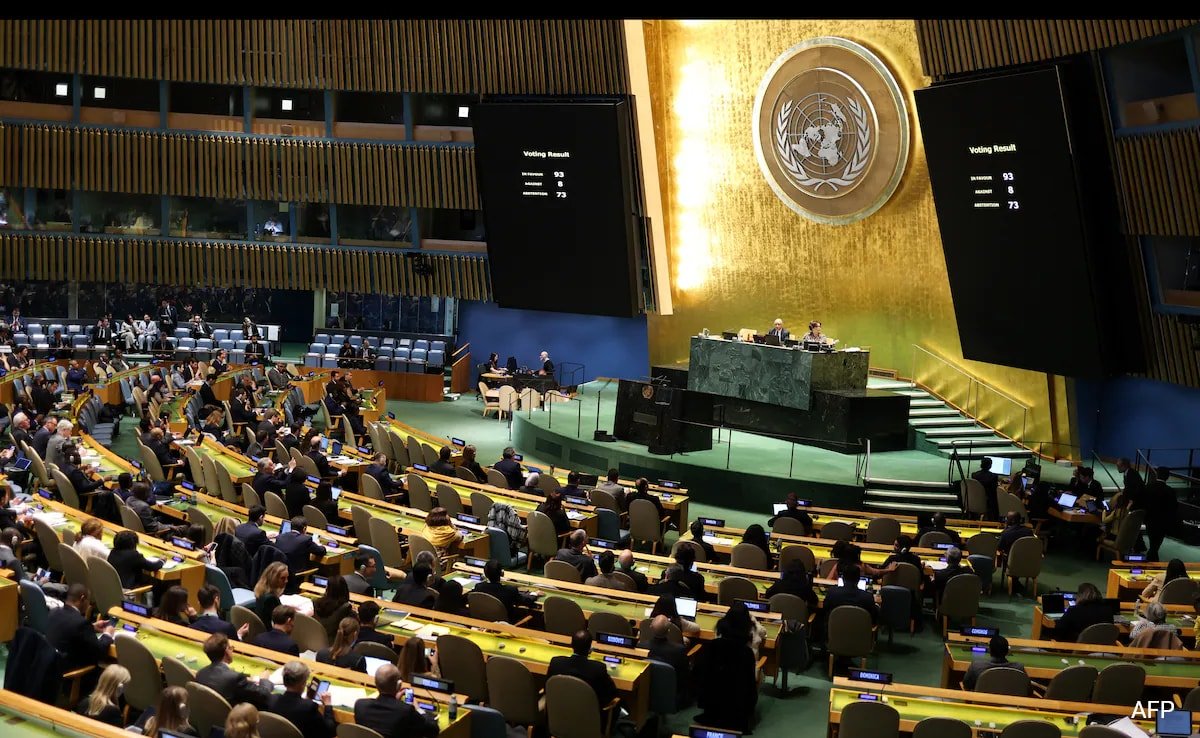
The resolution, marking the third anniversary of the invasion, was predominantly supported by European nations and garnered 93 votes in favor, 18 against, and 65 abstentions.
The U.S. decision to oppose this resolution, alongside countries such as Russia, Belarus, North Korea, and Sudan, signals a marked change in the United States' approach to the Ukraine conflict under the Trump administration.
This resolution emphasized condemnation of Russia’s actions in Ukraine and affirmed the necessity of respecting Ukraine's territorial integrity and sovereignty.
As tensions escalated between President Trump and Ukrainian President Volodymyr Zelensky, the U.S. introduced an alternative resolution that faced backlash from several nations.
France notably proposed amendments to incorporate the term "full-scale invasion of Ukraine" and to reaffirm commitments to Ukraine's territorial sovereignty, which were not included in the original U.S. draft.
Many European supporters of Ukraine expressed reluctance to accept the U.S. proposal without substantial revisions, leading to significant amendments being made.
Hungary, led by Prime Minister Viktor Orban, voted against these amendments, reflecting its pro-Russian stance.
Ultimately, the resolution that passed in the General Assembly maintained strong language aimed at condemning Russia and reiterated the importance of preserving Ukraine's borders—elements central to prior UN resolutions that had received strong backing from the U.S. during the Biden administration.
Dorothy Shea, the U.S. envoy to the UN, stated prior to the vote, "Neither these amendments, nor the resolution offered by Ukraine will stop the killing.
The UN must stop the killing," emphasizing the necessity for Member States to realign with the UN's primary goal of fostering international peace and security.
Following the adoption of the General Assembly resolution, it is expected that the United States will present its original resolution to the UN Security Council for consideration later in the day.
A U.S. State Department official expressed that the U.S. intends to use its veto power against any amendments proposed by Russia or European nations.
According to established UN protocols, resolutions presented to the Security Council require at least nine affirmative votes from the 15-member body, excluding vetoes from any of the five permanent members, which include the U.S., the UK, France, Russia, and China.
Even if members of the European Union on the Security Council, including France, Slovenia, Denmark, and Greece, along with the UK, abstain from voting, the U.S. resolution could potentially receive ratification.
This scenario poses a complex dilemma for France and the UK as their leaders, Emmanuel Macron and Keir Starmer, respectively, are currently in the U.S. for vital discussions concerning Ukraine.
UN Secretary-General Antonio Guterres has reiterated the necessity for a peace approach that respects Ukraine's territorial integrity and aligns with the principles set forth in the UN Charter.
The resolution, marking the third anniversary of the invasion, was predominantly supported by European nations and garnered 93 votes in favor, 18 against, and 65 abstentions.
The U.S. decision to oppose this resolution, alongside countries such as Russia, Belarus, North Korea, and Sudan, signals a marked change in the United States' approach to the Ukraine conflict under the Trump administration.
This resolution emphasized condemnation of Russia’s actions in Ukraine and affirmed the necessity of respecting Ukraine's territorial integrity and sovereignty.
As tensions escalated between President Trump and Ukrainian President Volodymyr Zelensky, the U.S. introduced an alternative resolution that faced backlash from several nations.
France notably proposed amendments to incorporate the term "full-scale invasion of Ukraine" and to reaffirm commitments to Ukraine's territorial sovereignty, which were not included in the original U.S. draft.
Many European supporters of Ukraine expressed reluctance to accept the U.S. proposal without substantial revisions, leading to significant amendments being made.
Hungary, led by Prime Minister Viktor Orban, voted against these amendments, reflecting its pro-Russian stance.
Ultimately, the resolution that passed in the General Assembly maintained strong language aimed at condemning Russia and reiterated the importance of preserving Ukraine's borders—elements central to prior UN resolutions that had received strong backing from the U.S. during the Biden administration.
Dorothy Shea, the U.S. envoy to the UN, stated prior to the vote, "Neither these amendments, nor the resolution offered by Ukraine will stop the killing.
The UN must stop the killing," emphasizing the necessity for Member States to realign with the UN's primary goal of fostering international peace and security.
Following the adoption of the General Assembly resolution, it is expected that the United States will present its original resolution to the UN Security Council for consideration later in the day.
A U.S. State Department official expressed that the U.S. intends to use its veto power against any amendments proposed by Russia or European nations.
According to established UN protocols, resolutions presented to the Security Council require at least nine affirmative votes from the 15-member body, excluding vetoes from any of the five permanent members, which include the U.S., the UK, France, Russia, and China.
Even if members of the European Union on the Security Council, including France, Slovenia, Denmark, and Greece, along with the UK, abstain from voting, the U.S. resolution could potentially receive ratification.
This scenario poses a complex dilemma for France and the UK as their leaders, Emmanuel Macron and Keir Starmer, respectively, are currently in the U.S. for vital discussions concerning Ukraine.
UN Secretary-General Antonio Guterres has reiterated the necessity for a peace approach that respects Ukraine's territorial integrity and aligns with the principles set forth in the UN Charter.
AI Disclaimer: An advanced artificial intelligence (AI) system generated the content of this page on its own. This innovative technology conducts extensive research from a variety of reliable sources, performs rigorous fact-checking and verification, cleans up and balances biased or manipulated content, and presents a minimal factual summary that is just enough yet essential for you to function as an informed and educated citizen. Please keep in mind, however, that this system is an evolving technology, and as a result, the article may contain accidental inaccuracies or errors. We urge you to help us improve our site by reporting any inaccuracies you find using the "Contact Us" link at the bottom of this page. Your helpful feedback helps us improve our system and deliver more precise content. When you find an article of interest here, please look for the full and extensive coverage of this topic in traditional news sources, as they are written by professional journalists that we try to support, not replace. We appreciate your understanding and assistance.