The New Oil Battlefield: How War, Chokepoints, and Alliances Are Rewiring Global Power
From Black Sea drone strikes to Hormuz brinkmanship, energy infrastructure has become the central arena where today’s conflicts quietly reshape the world economy
The global oil system—its ports, shipping lanes, and fragile chokepoints—has become the central battleground of a widening geopolitical confrontation, where wars are no longer fought only over territory but over the pipelines, terminals, and sea routes that sustain modern economies.
In recent weeks, that reality has sharpened dramatically.
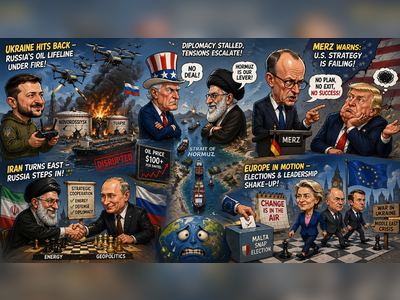
Ukraine has intensified a sustained campaign against Russian oil export infrastructure, striking key Black Sea terminals such as Novorossiysk and Tuapse—facilities essential to moving millions of barrels of crude to global markets.
Fires, shutdowns, and visible structural damage have followed repeated drone attacks, including a multi-day assault in April that forced the suspension of operations at Tuapse and triggered environmental fallout across the surrounding region.
What is confirmed is that these strikes have disrupted logistics and constrained parts of Russia’s export network, even as Moscow seeks alternative routes and insists the broader system remains resilient.
These attacks are not isolated acts of battlefield disruption.
They are part of a deliberate strategy to target the financial bloodstream of the Russian state.
Oil exports remain one of the Kremlin’s most important sources of revenue, and by focusing on ports and loading terminals rather than distant pipelines, Ukraine is striking at the precise moment when oil becomes cash.
Previous attacks on Black Sea and Baltic facilities have already shown the potential to halt shipments, reroute tankers, and raise costs across the system.
At the same time, thousands of kilometers away, another pressure point is tightening.
The Strait of Hormuz—through which a significant share of the world’s oil supply normally passes—has become the focal point of escalating tensions between Iran and the United States.
Iran has asserted control over the waterway, seized vessels, and threatened shipping, while the United States has responded with naval measures and enforcement actions against oil transport.
The result has been a sharp contraction in traffic and a surge in risk premiums that has driven global oil prices above one hundred dollars per barrel, with peaks significantly higher during the crisis.
The interaction between these two theaters—Ukraine’s strikes on Russian exports and instability in the Gulf—is where the story becomes more than regional.
When Middle Eastern supply routes falter, higher prices would ordinarily benefit major exporters like Russia.
Ukraine’s campaign is designed precisely to neutralize that advantage, reducing the volume Russia can sell just as prices rise.
In effect, one conflict is being used to offset the economic consequences of another.
This convergence is exposing a deeper structural truth about the global energy system: it is highly concentrated, physically vulnerable, and increasingly weaponized.
A handful of ports, straits, and terminals handle a disproportionate share of global supply.
When even one of these nodes is disrupted—whether by drones over the Black Sea or naval confrontation in the Gulf—the effects ripple quickly through shipping insurance, freight routes, and national economies.
The political consequences are already visible in Europe.
Rising energy costs are feeding inflation concerns and sharpening divisions within NATO over how to respond to overlapping crises.
German Chancellor Friedrich Merz has openly questioned the coherence of U.S. strategy toward Iran, reflecting broader unease about a conflict that is driving up energy prices while offering no clear resolution.
European governments now face a dual pressure: supporting Ukraine while managing the economic fallout of global energy instability.
Meanwhile, Iran’s outreach to Russia adds another layer of complexity.
High-level contacts between Tehran and Moscow point to a pragmatic alignment shaped less by ideology than by shared pressure from Western policy.
Russia, while engaged in its own war, has an interest in a prolonged disruption of global oil markets that keeps prices elevated—provided it can still export.
Iran, facing sanctions and military pressure, seeks diplomatic backing and strategic depth.
What remains unclear is how far this coordination will extend, and whether it will translate into tangible shifts in military or economic cooperation.
What distinguishes this moment is not simply that energy is influencing conflict—that has long been true—but that energy infrastructure itself has become the primary target.
Oil terminals burn, shipping lanes close, and tankers are seized not as collateral damage but as deliberate strategy.
The battlefield has expanded to include refineries, ports, and maritime corridors, turning the mechanics of global trade into instruments of war.
For consumers, the consequences appear as volatile fuel prices and economic uncertainty.
For governments, they translate into strategic dilemmas about security, alliances, and economic resilience.
For the global system, they raise a more fundamental question: how stable can an interconnected energy network remain when its most critical nodes are now treated as legitimate military targets?
The answer is still unfolding.
But as fires burn on the Black Sea coast and tankers hesitate at the entrance to the Persian Gulf, one fact is already clear: the map of global power is being redrawn not only by armies and diplomacy, but by who can disrupt—and who can protect—the flow of oil.
In recent weeks, that reality has sharpened dramatically.
Ukraine has intensified a sustained campaign against Russian oil export infrastructure, striking key Black Sea terminals such as Novorossiysk and Tuapse—facilities essential to moving millions of barrels of crude to global markets.
Fires, shutdowns, and visible structural damage have followed repeated drone attacks, including a multi-day assault in April that forced the suspension of operations at Tuapse and triggered environmental fallout across the surrounding region.
What is confirmed is that these strikes have disrupted logistics and constrained parts of Russia’s export network, even as Moscow seeks alternative routes and insists the broader system remains resilient.
These attacks are not isolated acts of battlefield disruption.
They are part of a deliberate strategy to target the financial bloodstream of the Russian state.
Oil exports remain one of the Kremlin’s most important sources of revenue, and by focusing on ports and loading terminals rather than distant pipelines, Ukraine is striking at the precise moment when oil becomes cash.
Previous attacks on Black Sea and Baltic facilities have already shown the potential to halt shipments, reroute tankers, and raise costs across the system.
At the same time, thousands of kilometers away, another pressure point is tightening.
The Strait of Hormuz—through which a significant share of the world’s oil supply normally passes—has become the focal point of escalating tensions between Iran and the United States.
Iran has asserted control over the waterway, seized vessels, and threatened shipping, while the United States has responded with naval measures and enforcement actions against oil transport.
The result has been a sharp contraction in traffic and a surge in risk premiums that has driven global oil prices above one hundred dollars per barrel, with peaks significantly higher during the crisis.
The interaction between these two theaters—Ukraine’s strikes on Russian exports and instability in the Gulf—is where the story becomes more than regional.
When Middle Eastern supply routes falter, higher prices would ordinarily benefit major exporters like Russia.
Ukraine’s campaign is designed precisely to neutralize that advantage, reducing the volume Russia can sell just as prices rise.
In effect, one conflict is being used to offset the economic consequences of another.
This convergence is exposing a deeper structural truth about the global energy system: it is highly concentrated, physically vulnerable, and increasingly weaponized.
A handful of ports, straits, and terminals handle a disproportionate share of global supply.
When even one of these nodes is disrupted—whether by drones over the Black Sea or naval confrontation in the Gulf—the effects ripple quickly through shipping insurance, freight routes, and national economies.
The political consequences are already visible in Europe.
Rising energy costs are feeding inflation concerns and sharpening divisions within NATO over how to respond to overlapping crises.
German Chancellor Friedrich Merz has openly questioned the coherence of U.S. strategy toward Iran, reflecting broader unease about a conflict that is driving up energy prices while offering no clear resolution.
European governments now face a dual pressure: supporting Ukraine while managing the economic fallout of global energy instability.
Meanwhile, Iran’s outreach to Russia adds another layer of complexity.
High-level contacts between Tehran and Moscow point to a pragmatic alignment shaped less by ideology than by shared pressure from Western policy.
Russia, while engaged in its own war, has an interest in a prolonged disruption of global oil markets that keeps prices elevated—provided it can still export.
Iran, facing sanctions and military pressure, seeks diplomatic backing and strategic depth.
What remains unclear is how far this coordination will extend, and whether it will translate into tangible shifts in military or economic cooperation.
What distinguishes this moment is not simply that energy is influencing conflict—that has long been true—but that energy infrastructure itself has become the primary target.
Oil terminals burn, shipping lanes close, and tankers are seized not as collateral damage but as deliberate strategy.
The battlefield has expanded to include refineries, ports, and maritime corridors, turning the mechanics of global trade into instruments of war.
For consumers, the consequences appear as volatile fuel prices and economic uncertainty.
For governments, they translate into strategic dilemmas about security, alliances, and economic resilience.
For the global system, they raise a more fundamental question: how stable can an interconnected energy network remain when its most critical nodes are now treated as legitimate military targets?
The answer is still unfolding.
But as fires burn on the Black Sea coast and tankers hesitate at the entrance to the Persian Gulf, one fact is already clear: the map of global power is being redrawn not only by armies and diplomacy, but by who can disrupt—and who can protect—the flow of oil.
AI Disclaimer: An advanced artificial intelligence (AI) system generated the content of this page on its own. This innovative technology conducts extensive research from a variety of reliable sources, performs rigorous fact-checking and verification, cleans up and balances biased or manipulated content, and presents a minimal factual summary that is just enough yet essential for you to function as an informed and educated citizen. Please keep in mind, however, that this system is an evolving technology, and as a result, the article may contain accidental inaccuracies or errors. We urge you to help us improve our site by reporting any inaccuracies you find using the "Contact Us" link at the bottom of this page. Your helpful feedback helps us improve our system and deliver more precise content. When you find an article of interest here, please look for the full and extensive coverage of this topic in traditional news sources, as they are written by professional journalists that we try to support, not replace. We appreciate your understanding and assistance.