
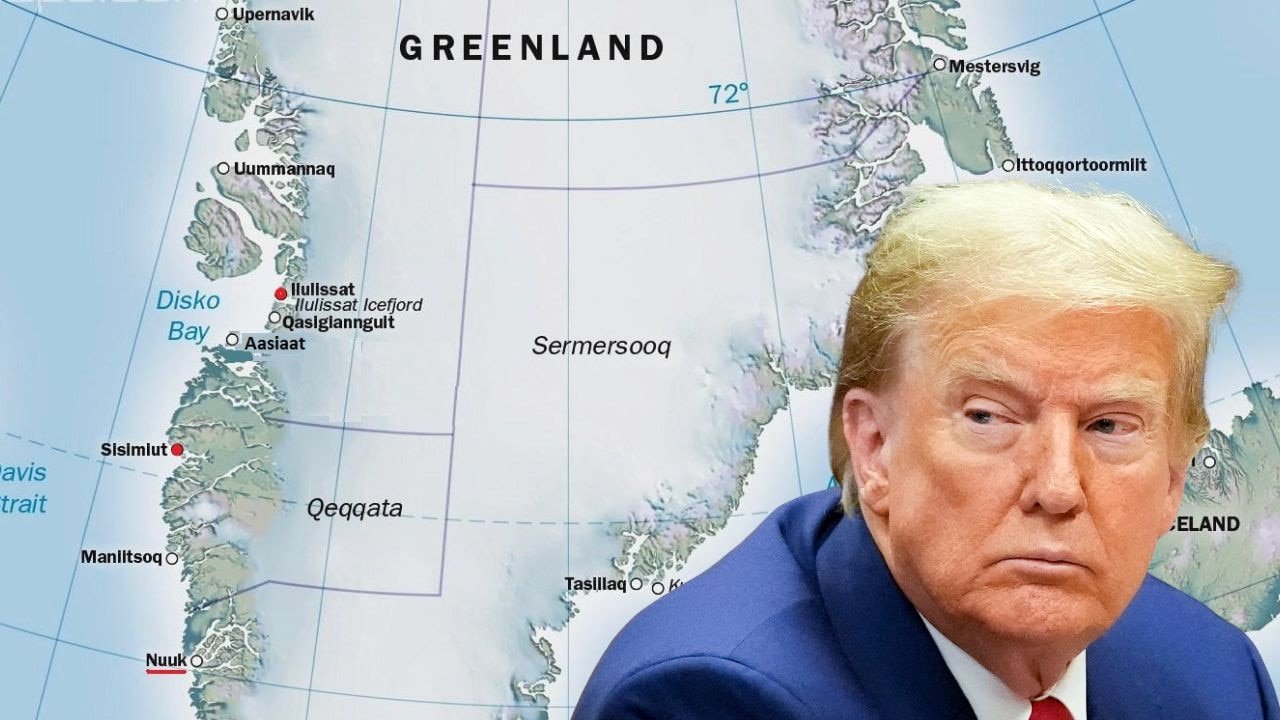


Trump Claims “Total” U.S. Access to Greenland as NATO Weighs Arctic Basing Rights and Deterrence
The reported framework would update the 1951 defense arrangement and expand beyond the Pituffik Space Base while Denmark and Greenland insist sovereignty remains unchanged.
President Donald Trump says he has secured “total and permanent” U.S. access to Greenland, signaling a turn from tariff pressure toward a negotiating track that would reshape Arctic basing rights, missile-defense posture, and allied coordination around a strategic territory with growing geopolitical value.
The immediate dispute is not whether the United States has interests in Greenland’s security geography—it already operates from the Pituffik Space Base—but whether Washington can widen its operational footprint and set tighter investment boundaries in the territory while Denmark and Greenland maintain that sovereignty and final authority over the island’s future remain intact.
The account presented frames the shift as de-escalation after a period of transatlantic strain, with the White House stepping back from earlier tariff threats directed at multiple European countries to pressure Denmark over Greenland.
In parallel, Trump describes a new arrangement as “much more generous to the United States,” and says it would give Washington freedom to do “exactly what we want to do,” language that amplifies the perception of maximal access even as allies stress legal and political limits.
A central component described is modernization of the 1951 defense treaty framework governing U.S. defense activities in Greenland, with negotiations tied to NATO leadership.
The outline presented centers on three pillars: expanded U.S. military presence beyond the existing base, installation of a “Golden Dome” missile-defense system, and a resource-investment posture designed to exclude Russian and Chinese capital from Greenland’s mineral sector.
European economic retaliation is also part of the pressure environment in the narrative: Trump warns of “big retaliation” if European actors dump U.S. assets such as Treasury bonds and stocks, while U.S. Treasury Secretary Scott Bessent is quoted dismissing Danish pension fund divestments as “irrelevant.” The same account says markets rebounded after the pause on new tariffs, underscoring how quickly financial conditions can become a bargaining instrument when security and trade are linked.
Confirmed vs unclear: What we can confirm is that President Donald Trump publicly claims “total and permanent” U.S. access to Greenland, while Denmark and Greenland state sovereignty is a non-negotiable red line; What’s still unclear is the precise legal text being negotiated, including the scope of any new basing rights beyond the Pituffik Space Base and how investment restrictions over mineral resources would be structured and enforced.
Mechanism: Greenland sits at the intersection of defense geography and alliance coordination.
The U.S. already maintains strategic capabilities in the Arctic through established basing, and a treaty update would operate by expanding authorized activities, facilities, and operating permissions within an alliance-consistent framework.
Investment exclusion would operate by tightening screening rules, licensing, or ownership limits to prevent rival-state capital from acquiring leverage over extraction, logistics, or critical infrastructure.
Stakeholder leverage: Washington’s leverage comes from unique Arctic capabilities, defense financing, and the strategic value it can offer NATO in surveillance and missile-defense coverage.
Denmark’s leverage comes from sovereignty and treaty consent, alliance politics, and the legitimacy that comes with a negotiated, rule-bound approach.
Greenland’s leverage comes from democratic mandate at home, control over local permissions, and the reality that any durable security arrangement must be socially and politically sustainable on the island.
Competitive dynamics: The competitive pressure in the Arctic is driven by deterrence, access, and denial.
If the United States expands its footprint, it signals commitment and complicates adversary planning; if allies resist expansive language, they protect cohesion and domestic legitimacy.
Russia and China function as the external reference point in the plan described—both as security competitors and as prospective investors—turning minerals and infrastructure into a strategic contest that sits beside basing and missile defense.
Scenarios: Base case: a limited treaty update proceeds through NATO coordination, expands operating permissions, and formalizes investment screening, while Denmark and Greenland preserve explicit sovereignty language.
Bull case: a clear, consent-based framework is finalized with defined basing expansion and rules-based investment restrictions that strengthen alliance unity and reduce trade spillovers.
Bear case: maximalist rhetoric outpaces legal reality, domestic politics in Denmark or Greenland harden, and transatlantic economic coercion returns, producing a cycle of retaliatory threats that weakens alliance trust.
What to watch:
- Whether NATO leadership publicly endorses an Arctic security plan tied to a summit timeline.
- Any formal reference to the 1951 defense framework being amended, supplemented, or replaced.
- Whether “Golden Dome” is defined as a specific missile-defense architecture or remains a political label.
- Any confirmation of new facilities beyond the Pituffik Space Base or expanded operating areas.
- Statements from Denmark’s prime minister about parliamentary or legal steps tied to treaty changes.
- Statements from Greenland’s prime minister about consultation, transparency, and consent.
- Any explicit language on restricting Russian and Chinese investment in Greenland’s mineral sector.
- Market signals tied to “Sell America” talk, including mentions of Treasury bonds or pension fund reallocations.
- Whether tariff threats remain paused or re-enter negotiations as leverage.
- Whether Washington narrows its “total access” language to operational permissions rather than sovereignty claims.
If the deal that emerges is precise, consent-based, and alliance-aligned, it can strengthen Arctic security coordination while respecting Denmark’s and Greenland’s constitutional boundaries—and it can do so in a way that keeps transatlantic relations steady as strategic competition accelerates.
The immediate dispute is not whether the United States has interests in Greenland’s security geography—it already operates from the Pituffik Space Base—but whether Washington can widen its operational footprint and set tighter investment boundaries in the territory while Denmark and Greenland maintain that sovereignty and final authority over the island’s future remain intact.
The account presented frames the shift as de-escalation after a period of transatlantic strain, with the White House stepping back from earlier tariff threats directed at multiple European countries to pressure Denmark over Greenland.
In parallel, Trump describes a new arrangement as “much more generous to the United States,” and says it would give Washington freedom to do “exactly what we want to do,” language that amplifies the perception of maximal access even as allies stress legal and political limits.
A central component described is modernization of the 1951 defense treaty framework governing U.S. defense activities in Greenland, with negotiations tied to NATO leadership.
The outline presented centers on three pillars: expanded U.S. military presence beyond the existing base, installation of a “Golden Dome” missile-defense system, and a resource-investment posture designed to exclude Russian and Chinese capital from Greenland’s mineral sector.
European economic retaliation is also part of the pressure environment in the narrative: Trump warns of “big retaliation” if European actors dump U.S. assets such as Treasury bonds and stocks, while U.S. Treasury Secretary Scott Bessent is quoted dismissing Danish pension fund divestments as “irrelevant.” The same account says markets rebounded after the pause on new tariffs, underscoring how quickly financial conditions can become a bargaining instrument when security and trade are linked.
Confirmed vs unclear: What we can confirm is that President Donald Trump publicly claims “total and permanent” U.S. access to Greenland, while Denmark and Greenland state sovereignty is a non-negotiable red line; What’s still unclear is the precise legal text being negotiated, including the scope of any new basing rights beyond the Pituffik Space Base and how investment restrictions over mineral resources would be structured and enforced.
Mechanism: Greenland sits at the intersection of defense geography and alliance coordination.
The U.S. already maintains strategic capabilities in the Arctic through established basing, and a treaty update would operate by expanding authorized activities, facilities, and operating permissions within an alliance-consistent framework.
Investment exclusion would operate by tightening screening rules, licensing, or ownership limits to prevent rival-state capital from acquiring leverage over extraction, logistics, or critical infrastructure.
Stakeholder leverage: Washington’s leverage comes from unique Arctic capabilities, defense financing, and the strategic value it can offer NATO in surveillance and missile-defense coverage.
Denmark’s leverage comes from sovereignty and treaty consent, alliance politics, and the legitimacy that comes with a negotiated, rule-bound approach.
Greenland’s leverage comes from democratic mandate at home, control over local permissions, and the reality that any durable security arrangement must be socially and politically sustainable on the island.
Competitive dynamics: The competitive pressure in the Arctic is driven by deterrence, access, and denial.
If the United States expands its footprint, it signals commitment and complicates adversary planning; if allies resist expansive language, they protect cohesion and domestic legitimacy.
Russia and China function as the external reference point in the plan described—both as security competitors and as prospective investors—turning minerals and infrastructure into a strategic contest that sits beside basing and missile defense.
Scenarios: Base case: a limited treaty update proceeds through NATO coordination, expands operating permissions, and formalizes investment screening, while Denmark and Greenland preserve explicit sovereignty language.
Bull case: a clear, consent-based framework is finalized with defined basing expansion and rules-based investment restrictions that strengthen alliance unity and reduce trade spillovers.
Bear case: maximalist rhetoric outpaces legal reality, domestic politics in Denmark or Greenland harden, and transatlantic economic coercion returns, producing a cycle of retaliatory threats that weakens alliance trust.
What to watch:
- Whether NATO leadership publicly endorses an Arctic security plan tied to a summit timeline.
- Any formal reference to the 1951 defense framework being amended, supplemented, or replaced.
- Whether “Golden Dome” is defined as a specific missile-defense architecture or remains a political label.
- Any confirmation of new facilities beyond the Pituffik Space Base or expanded operating areas.
- Statements from Denmark’s prime minister about parliamentary or legal steps tied to treaty changes.
- Statements from Greenland’s prime minister about consultation, transparency, and consent.
- Any explicit language on restricting Russian and Chinese investment in Greenland’s mineral sector.
- Market signals tied to “Sell America” talk, including mentions of Treasury bonds or pension fund reallocations.
- Whether tariff threats remain paused or re-enter negotiations as leverage.
- Whether Washington narrows its “total access” language to operational permissions rather than sovereignty claims.
If the deal that emerges is precise, consent-based, and alliance-aligned, it can strengthen Arctic security coordination while respecting Denmark’s and Greenland’s constitutional boundaries—and it can do so in a way that keeps transatlantic relations steady as strategic competition accelerates.
AI Disclaimer: An advanced artificial intelligence (AI) system generated the content of this page on its own. This innovative technology conducts extensive research from a variety of reliable sources, performs rigorous fact-checking and verification, cleans up and balances biased or manipulated content, and presents a minimal factual summary that is just enough yet essential for you to function as an informed and educated citizen. Please keep in mind, however, that this system is an evolving technology, and as a result, the article may contain accidental inaccuracies or errors. We urge you to help us improve our site by reporting any inaccuracies you find using the "Contact Us" link at the bottom of this page. Your helpful feedback helps us improve our system and deliver more precise content. When you find an article of interest here, please look for the full and extensive coverage of this topic in traditional news sources, as they are written by professional journalists that we try to support, not replace. We appreciate your understanding and assistance.